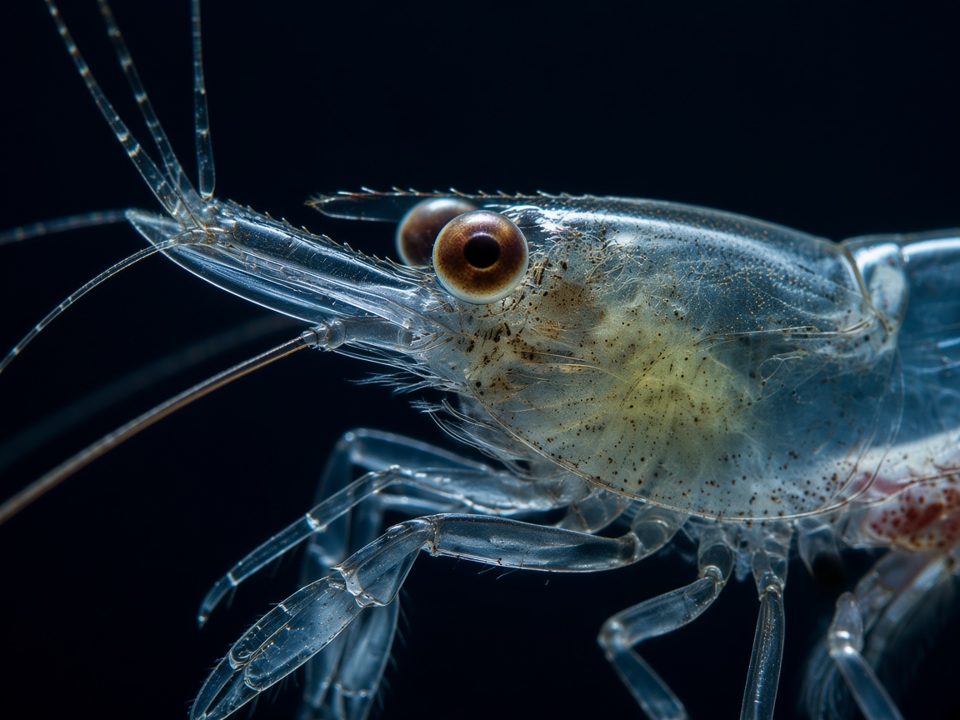
| Species | Palaemonetes paludosus (freshwater) |
|---|---|
| Mating | Right after the female molts, while her shell is soft |
| Eggs | Carried under the female's abdomen |
| Hatching | About 12 to 14 days at 26 to 28 C (79 to 82 F) |
| Larvae | Three short larval stages, about 4 mm, in fresh water |
| Maturity | About 2 to 3 months above 26 C |
| Season | Year-round in Florida |
How to tell a female is berried
A berried female has eggs attached to the swimmerets under her tail. Animal Diversity Web explains that fertilized eggs stick to the pleopods and bristles on the underside of the abdomen. Because ghost shrimp are clear, the egg cluster is easy to spot from the side. Before spawning, a female's ripening ovaries take on a greenish color, which you may see as a green patch behind her head.
Females are usually a little larger and deeper bodied than males. A female that is constantly fanning her swimmerets is aerating her eggs, which is normal.
How mating works
Breeding is tied to molting. Animal Diversity Web reports that females become receptive right after a molt, while the shell is soft, and mating happens within about seven hours of the molt. The male transfers a sperm packet, and the female lays and fertilizes her eggs within about seven hours after that. You may notice males suddenly swimming around searching after a female molts. This is normal.
For more on molting, see ghost shrimp molt or dead and our molting guide.
Eggs, hatching and how many babies
At 26 to 28 C (about 79 to 82 F), Animal Diversity Web gives an incubation period of about 12 to 14 days. Cooler water takes longer. It also reports that a female produces roughly 8 to 85 eggs in her life, and that many egg-carrying females already have ripe ovaries again, so two broods per female are possible. In Florida's warm water, the species breeds year-round.
Do not expect hundreds of babies from one female. Small, steady broods are normal for this species.
Why these larvae can survive in fresh water
This is the big difference between Palaemonetes paludosus and many other aquarium shrimp. Some popular species, such as the Amano shrimp (Caridina multidentata), have larvae that need brackish or salt water to develop, which makes them hard to breed at home. Ghost shrimp from the eastern US live and breed in freshwater ponds, lakes and streams.
Animal Diversity Web describes the larval development of this species as short, with just three larval stages before the postlarva. The first stage metamorphoses about 5 to 10 days after hatching, and the larvae are only about 4 mm long. Because the whole cycle happens in fresh water, you do not need to add salt to raise them.
Note that the name ghost shrimp is used for several species in the trade. If your shrimp came from another source, it may not breed the same way. Our Florida ghost shrimp guide explains the species we sell.
Should you separate a berried female?
In a tank with fish, yes. Larvae are tiny and almost any fish will eat them, and adult shrimp may eat them too. A simple setup works:
- Prepare a small tank, about 5 to 10 gallons, with water from the main tank.
- Use a sponge filter so larvae are not sucked into an intake.
- Add plenty of fine-leaved plants or moss for cover and biofilm.
- Move the female gently in a cup, not a net, so she does not drop her eggs.
- Once the eggs hatch, return the female to the main tank.
Feeding larvae and baby shrimp
Newly hatched larvae still carry some yolk, but they soon need food small enough to catch. Keepers commonly use very fine foods:
- Infusoria or green water.
- Powdered fry foods or finely crushed flakes, in tiny pinches.
- Biofilm from a mature sponge filter and plenty of moss or plants.
Feed small amounts often and keep the water very clean, since leftover food fouls a small tank quickly. Once the young look like tiny adult shrimp, they can eat crushed pellets and flakes. Animal Diversity Web reports that development from hatching to maturity takes about two to three months in water above 26 C, and longer in cooler water.
Tips for more babies
- Keep a group with plenty of females rather than just a few shrimp.
- Keep the water warm and stable. Breeding in this species usually happens between about 18 and 33 C, per Animal Diversity Web.
- Feed a varied diet so females are well conditioned.
- Give lots of cover so molting females are safe.
For a full species breeding rundown, see how to breed ghost shrimp. Outdoor tubs work too; see ghost shrimp for container ponds.
Frequently asked questions
How long are ghost shrimp pregnant?
In Palaemonetes paludosus, eggs hatch after about 12 to 14 days at 26 to 28 C, according to Animal Diversity Web. Cooler water takes longer.
Do ghost shrimp larvae need salt water?
Not for Palaemonetes paludosus. Its larval development is short and happens in fresh water. Some other shrimp sold as ghost shrimp, and species like Amano shrimp, do need brackish water.
Should I separate my berried ghost shrimp?
In a tank with fish, yes. Move her to a calm, planted tank with a sponge filter and return her after the eggs hatch.
What do baby ghost shrimp eat?
Very fine foods such as infusoria, green water, powdered fry food and biofilm, in small amounts.
How many eggs does a ghost shrimp carry?
Animal Diversity Web reports roughly 8 to 85 eggs over a female's life, sometimes in two broods.
Sources
- Animal Diversity Web (University of Michigan): Palaemonetes paludosus
- Animal Diversity Web: Decapoda
- Wikipedia (supplement): Caridina multidentata
- US EPA CADDIS: ammonia
Husbandry notes are general guidance for hobbyists. Check your state's rules before keeping, releasing or using live animals as bait.