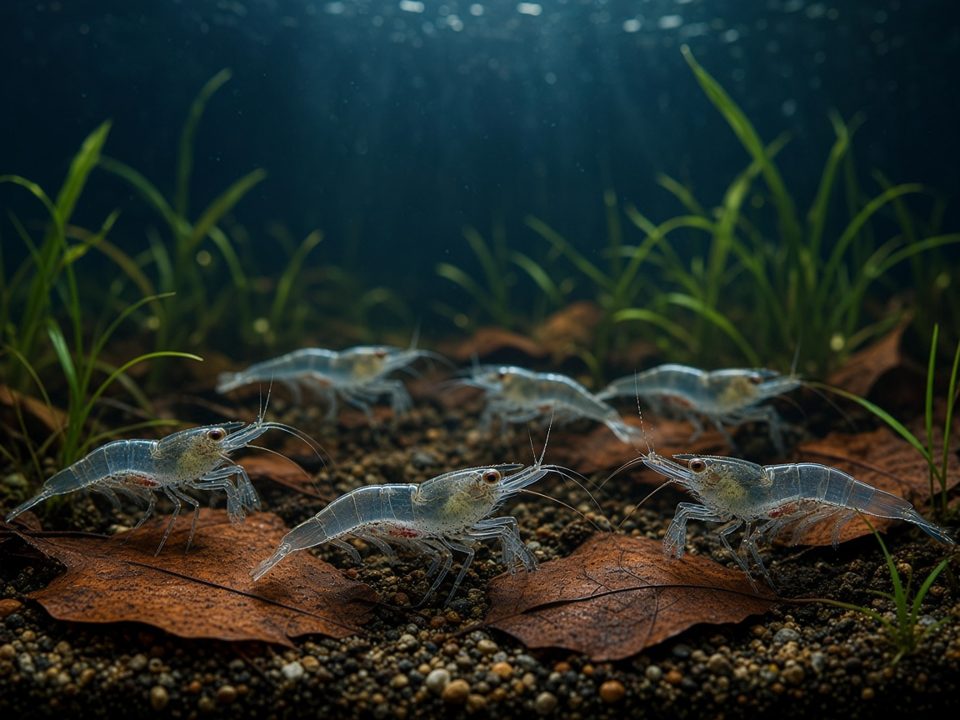
| Species | Palaemonetes paludosus, native to the eastern US |
|---|---|
| Natural habitat | Ponds, lakes and streams, most common in dense plants |
| Preferred temperature | About 50 to 95 F (10 to 35 C), per Animal Diversity Web |
| Starting stock | About 1 to 2 shrimp per gallon |
| Diet | Algae, plant matter, detritus, small insects |
| Winter | Bring indoors where the pond can freeze solid |
Why ghost shrimp fit container ponds
Container ponds, from a half barrel on a patio to a stock tank in the garden, are small, planted and still. That is close to where wild ghost shrimp live. Animal Diversity Web describes Palaemonetes paludosus as a freshwater shrimp of ponds, lakes and streams, most abundant in dense beds of submerged vegetation and rare where plants are scarce. In summer it is often found among semi-aquatic grasses and water hyacinths.
Because the species is native from Florida to New Jersey along the coastal plain, it is a natural pick for outdoor tubs in much of the eastern United States. Ghost shrimp are small, clear and peaceful, and spend their time picking through plants and leaf litter, so they add life to a pond without stirring it up like larger animals do.
Setting up a patio or barrel pond
- Container: any food-safe, watertight tub, barrel liner or stock tank. Bigger is more stable. Small containers heat and cool fast.
- Plants first: fill a good part of the water with plants. Submerged plants such as hornwort or anacharis, plus floaters such as water lettuce where legal, give shrimp cover and grazing surfaces.
- Substrate and leaves: a thin layer of gravel or a few clean leaves on the bottom gives shrimp places to forage.
- Shade: place the pond where it gets shade in the hottest part of the afternoon, or let floating plants cover part of the surface.
- Water movement: a small air pump with an air stone, or a gentle fountain pump, keeps oxygen up. The US EPA notes that warm water holds less dissolved oxygen, which matters in a small summer pond.
Let a new pond settle and grow plants for a couple of weeks before adding shrimp. Use a water conditioner if you fill from treated tap water.
Temperature: summer heat and the safe range
Animal Diversity Web lists a preferred range of about 10 to 35 C, or roughly 50 to 95 F, for this species. Florida shrimp handle warm water well, but a small dark container in full sun can climb past that on summer afternoons. Use a cheap thermometer and check it in the late afternoon, when water is warmest.
- If water gets too warm, add shade, more floating plants or a top-up of cool, conditioned water.
- Increase aeration during heat waves, since warm water holds less oxygen.
- Avoid big, sudden temperature swings. Shrimp handle slow seasonal change far better than shocks.
How many ghost shrimp to stock
A simple starting point is about 1 to 2 shrimp per gallon in a well planted container. A 25 to 50 gallon patio tub fits the 25 count or 50 count, and a small in-ground pond can take the 100 count. More plants and gentle filtration support more shrimp. For tank math, see how many ghost shrimp per gallon, and for larger ponds, see our pond stocking guide.
Starting a little light is better than overstocking. In warm months a healthy pond can grow its own population, because this species breeds year-round in Florida waters, according to Animal Diversity Web.
Algae and detritus cleanup
Animal Diversity Web reports that the diet of Palaemonetes paludosus is mainly algae, especially diatoms and green algae, plus plant matter, aquatic insects and other organic matter. In a pond that means shrimp pick at the film on leaves and pots, and sort through settled debris and leftover food.
Be realistic: ghost shrimp tidy the small stuff, but they will not clear a green water bloom or remove a thick mat of string algae on their own. Pair them with shade, plants that compete for nutrients and light feeding of any other pond animals. Think of them as a cleanup crew that keeps detritus from piling up, not as a filter.
For the cleanup side in aquariums, read are ghost shrimp good cleaners.
Feeding pond shrimp
A well planted, established container pond often grows enough algae and biofilm to feed a modest group. If the pond is new, sparsely planted or heavily stocked, offer a small pinch of sinking pellets or a piece of blanched vegetable a few times a week. Remove anything left after a few hours so it does not rot.
Winter care
Ghost shrimp are native to places that get cool winters, and Animal Diversity Web notes that populations shrink and grow through the year. A small container is different from a big lake, though. It can freeze solid, and shrimp cannot survive in ice.
- Florida and the Deep South: many container ponds can stay outside all year. Watch for rare cold snaps and cover the pond on freezing nights.
- Colder regions: before the water drops near freezing, net the shrimp and move them to an indoor tank or tub with a sponge filter and air stone.
- Larger in-ground ponds: deeper water that does not freeze to the bottom, with a floating de-icer or air stone keeping a hole open, gives shrimp a better chance. Results vary by climate.
Bring them back outside in spring once water temperatures are steady again, and acclimate them slowly to the pond water.
Adding shrimp to the pond
Float the sealed bag 20 to 30 minutes, then move the shrimp with a soft net or cup. Never pour the shipping water into your tank. Full steps are on our acclimation page.
Release new shrimp near plants, in the cool part of the day, rather than in open water at noon.
Never release ghost shrimp or pond water into wild lakes, rivers or ditches. The USGS tracks Palaemonetes paludosus where it has been introduced outside its native range, and Florida's FWC has rules about releasing animals. Keep your shrimp in your pond.
Frequently asked questions
Can ghost shrimp live in a patio pond?
Yes. Palaemonetes paludosus is a freshwater pond species that does best among dense plants. Give a patio pond plenty of plants, afternoon shade and gentle aeration.
What temperature can ghost shrimp tolerate outdoors?
Animal Diversity Web lists a preferred range of about 50 to 95 F (10 to 35 C). Avoid sudden swings and keep small containers from overheating or freezing solid.
How many ghost shrimp should I put in a container pond?
Start with about 1 to 2 shrimp per gallon in a well planted container. A 25 to 50 gallon tub suits a 25 or 50 count.
Do ghost shrimp eat pond algae?
They graze algae films and eat detritus and plant matter, but they will not clear green water or heavy string algae alone. Combine them with plants and shade.
Can ghost shrimp survive winter outside?
In warm climates often yes. Where a container can freeze solid, bring the shrimp indoors for winter.
Sources
- Animal Diversity Web (University of Michigan): Palaemonetes paludosus
- US EPA CADDIS: dissolved oxygen
- US EPA CADDIS: temperature
- USGS Nonindigenous Aquatic Species program
- FWC: nonnative species
Husbandry notes are general guidance for hobbyists. Check your state's rules before keeping, releasing or using live animals as bait.