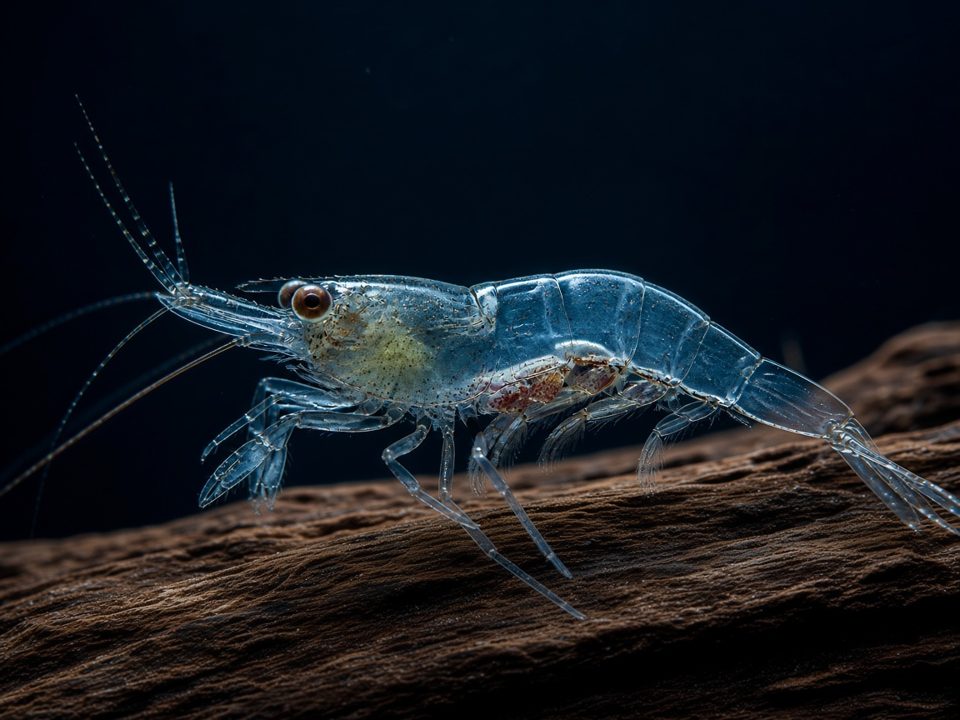
| Empty molt | Clear, hollow, very light, split at the back of the head |
|---|---|
| Dead shrimp | Solid body, opaque white, orange or pink |
| Touch test | Molts crumple or float; dead shrimp feel firm |
| Count test | A molt means a living shrimp is hiding nearby |
| What to do with a molt | Leave it; shrimp often eat it |
| What to do with a dead shrimp | Remove it and test ammonia and nitrite |
Why this question comes up so often
Ghost shrimp are transparent, so their shed shells look almost exactly like a whole shrimp lying on the substrate. New keepers often spot one, assume a shrimp died and start changing water in a hurry. Most of the time it is simply a molt. Knowing the difference saves shrimp, because a panicked large water change can cause more problems than it solves.
What molting is
Shrimp wear their skeleton on the outside, and it cannot stretch. To grow, a shrimp forms a new soft shell underneath, splits the old one and climbs out. This shedding is called ecdysis, and it is how all crustaceans grow. The new shell hardens over the next hours. Animal Diversity Web notes that female Palaemonetes paludosus are receptive to mating right after molting, while the shell is soft, so molting is part of breeding too.
For the full process, see our ghost shrimp molting guide.
How to tell a molt from a dead shrimp
- Look inside. A molt is empty and see-through, including the legs and antennae. A dead shrimp has tissue inside and looks solid.
- Check the color. A fresh molt is clear or faintly cloudy. A dead shrimp usually turns opaque white, orange or pinkish within hours.
- Find the split. Molts usually have an opening where the head shell meets the body, which is where the shrimp climbed out.
- Do the touch test. Nudge it with a net. A molt is so light it drifts, flips or crumples. A dead shrimp is heavier and holds its shape.
- Count your shrimp. If every shrimp is accounted for, or one is hiding pale and soft, you found a molt.
What a molting shrimp looks like
You rarely catch the moment itself, because it is quick and shrimp often molt at night or under cover. Animal Diversity Web notes that this species is more active at night. Before a molt, many keepers notice a shrimp hiding more and eating less. Afterward, the shrimp may look paler or slightly cloudy and stay tucked in plants or under wood for several hours while the new shell hardens.
That soft window is when shrimp are most vulnerable, which is why plenty of cover matters.
How often ghost shrimp molt
Young shrimp grow quickly and molt more often, roughly every one to two weeks. Adults molt less often, around every three to four weeks. Warmer water and plenty of food speed growth and molting, and cooler water slows it, so a run of molts after you warm a tank or start feeding more is normal. Finding a molt every so often in a healthy group is a good sign that your shrimp are growing.
What to do after finding a molt
- Leave it in the tank for a few days. Shrimp often eat their old shells.
- Remove it only if it starts to break down or grow fuzz.
- Avoid a large water change just because you found a molt. Keep temperature and hardness steady.
- Make sure there is cover, such as plants, moss or wood, so soft shrimp can hide.
What to do if it is a dead shrimp
- Remove the body right away so it does not foul the water.
- Test ammonia and nitrite. The US EPA notes that ammonia is toxic to aquatic animals even at low levels.
- Check temperature and whether your filter or air stone is running.
- If water tests are off, do a small, temperature-matched water change rather than a huge one.
- Think back: any new medication, plant treatment, sprays near the tank or copper-based products?
One loss in a large group, especially right after shipping, is not always a sign of a problem. Several losses in a few days is.
Warning signs of molting trouble
- A shrimp stuck halfway out of its shell. This is a failed molt. It usually cannot be saved, so focus on prevention.
- A pale band around the middle of the body, sometimes called the white ring, which can show a molt that is not going well.
- Several shrimp dying around molting time, often linked to sudden water changes, unstable hardness, poor diet or toxins.
For how molting fits into a shrimp's life, see ghost shrimp lifespan. If your molting shrimp is a female carrying eggs soon after, see ghost shrimp breeding and berried females.
Frequently asked questions
Is my ghost shrimp dead or molting?
Check for an empty, clear shell that is very light and split behind the head. That is a molt. A solid, opaque white or pink body that feels firm is a dead shrimp.
Should I remove a ghost shrimp molt?
No. Leave it a few days so shrimp can eat it. Remove it only if it starts to break down.
Why does my ghost shrimp look white after molting?
A freshly molted shrimp can look pale or cloudy while its new shell hardens. If it stays opaque and stops moving, it may be sick or dead.
How often do ghost shrimp molt?
Juveniles roughly every one to two weeks and adults around every three to four weeks, faster in warm water.
What causes a failed molt?
Sudden water changes, unstable hardness, poor diet and toxins such as ammonia or copper are common causes.
Sources
- Animal Diversity Web (University of Michigan): Palaemonetes paludosus
- Animal Diversity Web: Decapoda
- Wikipedia (supplement): Ecdysis
- US EPA CADDIS: ammonia
Husbandry notes are general guidance for hobbyists. Check your state's rules before keeping, releasing or using live animals as bait.